Showing posts with label Currency. Show all posts

Tuesday, April 24, 2018

Bitcoin, Ripple rise sharply again: Is there a way to invest despite RBI clampdown?

Crypto players say that there is still a possibility of taking positions in India without making or receiving payments in actually currency.
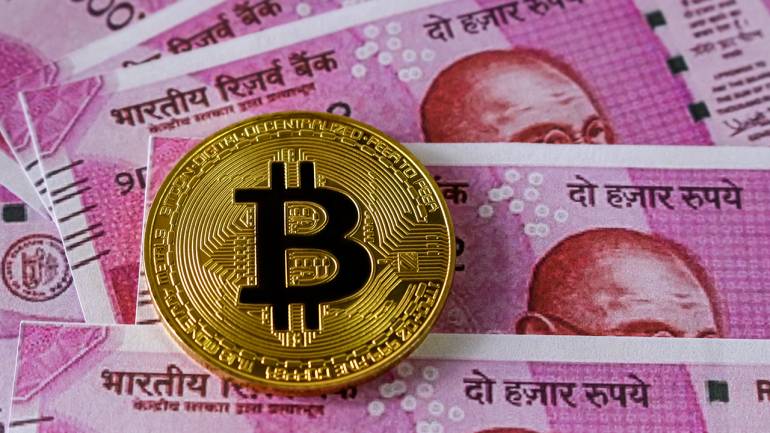

After a massive decline in prices since the beginning of the year, cryptocurrencies have shown substantial rise once again during April with reports suggesting that Bitcoin rose 36 per cent during the month and coming close to $10,000. It had slipped to $6500 levels at the beginning of the month.

Other big names in the crypto market rose at a faster pace in April. While Ethereum gained 56%, Ripple moved higher by 68%.

Are you as Indian investor wanting to join the party but sitting on the sidelines watching helplessly ever since the Reserve Bank of India in its credit policy earlier this month clamped down on crypto exchanges by directing its regulated entities not to deal with virtual currency exchanges?

Well, crypto market players say that there still is a possibility of taking positions in the cryptocurrencies in India. This has to be done without making or receiving payments in actual currency.

“RBI’s decision will surely increase the friction of transactions carried out through the Indian exchanges, but it isn’t an end to the crypto markets in India although there might be a shift in the modus operandi. There is possibility to trade crypto-to-crypto and not fiat (money)-to-crypto. The logistics of this will have to be re-visited since if you’re transacting through an Indian exchange, you need to have an Indian bank account. Else, the businesses will shift offshore, and only those Indians that have foreign bank accounts in the relevant country will be able engage in fiat-to-crypto and crypto-to-fiat trading. This will all of course depend on the laws of the foreign traders/account holders etc,” Varun Satyam, CBO, Almora, a cruptocurrency investment banktold Moneycontrol.

Satyam believes those who already have positions in cryptocurrencies can consider holding on to their positions till a finality is reached on litigation filed against the RBI directive. “Should Investors who truly believe in the idea of cryptocurrencies would still continue holding them. The other two ways down the line at present, either cash out or continue trading, but both options have their caveats. If they want to cash out, there is a possibility that the crypto markets would get flooded as many people might look to cash-out, and there may not be enough buyers which will drive prices downward. So holding on to their investments for markets to mature is one probable solution,” he said.

Several cryptocurrency platforms have approached the courts against RBI’s recent clampdown. “Industry stakeholders are discussing the issue with groups such as the Blockchain And Cryptocurrency Committee of India and the Internet and Mobile Association of India to quickly come up with feasible solutions for the current market situations. The government might have to retract on its stand like it happened in Korea else the cash OTC market will continue to flourish. If the government stands firm on their decision then these entities will have to eventually pivot their business model from crypto-fiat to crypto-crypto hence omitting the fiat part in totality,” Satyam said.

Other crypto players feel that proper regulation of the market will help the cryptocurency market to grow in the long run. “Nations in large numbers are bringing regulations because of which stability and awareness will come in market and hence more people will enter cryptocurrency,” Bharat Verma, Founder and CEO, Pluto Exchange said.

Friday, April 7, 2017

India ranks 9th in bribery and corrupt practices in businesses

India ranks ninth among 41 countries in bribery and corrupt practices in businesses, according to the findings of a recent survey.

Nearly 78 per cent respondents queried in the country said that bribery and corrupt practices happen widely in businesses here, as per the EY Europe, Middle East, India and Africa (EMEIA) Fraud Survey 2017.

India ranks behind Ukraine, Cyprus, Greece, Slovenia, Croatia, Kenya, South Africa and Hungary, in the perception survey.

The ranking has improved marginally from the survey findings in 2015 when India was at the sixth position, owing to better regulatory scrutiny and emphasis on transparency and governance.

"The perception of fraud and corruption in corporate India has seen a marginal but positive shift, led by amplified regulatory scrutiny and emphasis on transparency and governance," EY India's Partner and National Leader, Fraud Investigation & Dispute Services, Arpinder Singh said.

"However, unethical behaviour at the workplace among Gen Y (generally referred to people born in the 1980s-90s) has become a serious cause of concern," he said.

He further pointed out that while improved enforcement action has restored confidence in businesses, organisations should encourage millennials to "strengthen their moral compass, communicate the importance of upholding ethical standards and develop programmes to motivate future leaders make right choices in life."

The report said that uncertainties in the business environment, augmenting pressure to meet financial targets and aspirations to achieve unprecedented career growth are driving employees to justify unethical workplace behaviour.

Nearly 41 per cent of Indian respondents would be prepared to act unethically to enhance their own career, the findings revealed.

Further, over 13 per cent are prepared to provide false information to improve their career or pay, while 58 per cent stated that loyalty towards company prevents employees from reporting fraud, bribery or corruption.

Globally, 1 in 5 respondents said they would be prepared to act unethically for their careers.

Thursday, December 15, 2016

If demonetisation fails, Modi will be destroyed - H.D. Deve Gowda


The former Prime Minister H.D. Deve Gowda spoke to Smita Gupta on the impact of demonetisation and the evolving political situation.
In a recent speech, you compared the Emergency imposed by Indira Gandhi to the current situation following demonetisation...
When banks were nationalised and privy purses abolished, the people thought this major step taken by Indira Gandhi would benefit the poor and solve the unemployment problem… In the 1971 Parliament elections, she won a two-thirds majority; in 1972, after the Assembly elections, almost all the States came under the Congress umbrella; there was virtually no Opposition in the country. People believed in Indira Gandhi’s slogans, garibi hatao, berojgari hatao.

In 1971, she was at her peak. But within just three years, in Nagpur when she went to address a public meeting where she announced the slogan of a curb on consumption, people pounced on her and the police had to escort her out.
What are your objections to the demonetisation decision?
On November 17, I wrote to the Prime Minister, welcoming the move but said it had been done without a proper assessment of the situation. From November 8 to now, several alterations have been made; now the amendments to the Taxation Bill have created confusion. My concern is will these steps yield the expected results? If it does, then Modi will be a great leader. If he can achieve his dreams of a Digital India, cashless economy, within six months, certainly I will bow my head. If this demonetisation succeeds, he will be the unquestioned leader. If it fails, he will be destroyed.
What about the long term impact on the economy?
The GDP is going to go down. The value of the rupee could fluctuate. If within six months things don’t settle down, and digital India is not put in place, the problems will increase. Unemployment will grow — people in the unorgansised sector will be hit.
But there’s no social unrest yet.
No political party has provoked the situation in anyState; only Mamata Banerjee has taken a tough stand in public meetings and has spoken of a financial emergency. She’s a fighter. She has not accumulated any money; she probably has half a dozen khadi saris and is living in the same house as she was when she first entered Parliament. People speak of the Sarada scam, the chit funds in Bengal, but she’s a fighter. The people are with her.
Is it time for a Third Front?
I don’t want to jump to conclusions that there will be a Third Front tomorrow. Circumstances will create the situation ... if there is an adverse impact of demonetisation, then the people will put pressure on political parties. People are tolerant. But there will be a limit to their patience.
Who could be the leader of a possible Third Front?
Circumstances will force a name.. Who am I? In 1996, I was forced to weep on that day before the 13 parties: ‘Leave me, I am on the gaddi of Chief Minister for 18 months; I told Jyoti Basu you have been Chief Minister for 18 years; you become Prime Minister. He agreed but his party was divided….

Friday, December 2, 2016

No seizure of gold jewellery up to 500g per married lady in Income Tax raids

Amendments to the I-T laws do not seek to tax inherited gold and jewellery as also those items that are purchased through disclosed or agriculture income, the government said today. 

The Lok Sabha earlier this week passed the Taxation Laws (Second Amendment) Bill, which proposes a steep up to 85 per cent tax and penalty on undisclosed wealth that is discovered by tax authorities during search and seizure. 

Dispelling rumours that jewellery would be covered under the amended law, the Central Board of Direct Taxes (CBDT) said the government has not introduced any new provision regarding chargeability of tax on jewellery.

"The jewellery/gold purchased out of disclosed income or out of exempted income like agricultural income or out of reasonable household savings or legally inherited which has been acquired out of explained sources is neither chargeable to tax under the existing provisions nor under the proposed amended provisions," the CBDT said. 

NO SEIZURE OF GOLD FROM MARRIED WOMEN
During search operations, conducted by I-T Department, there would be no seizure of gold jewellery and ornaments to the extent of 500 grams per married women, 250 gm per unmarried women as also 100 gm per male member of the family, it said.

"Further, legitimate holding of jewellery up to any extent is fully protected," it added.

The Bill, which is currently under consideration of the Rajya Sabha, will amend Section 115BBE of the Income Tax Act to provide for a steep 60 per cent tax and a 25 per cent surcharge on it (total 75 per cent) for black money holders. 

Another section inserted provides for an additional 10 per cent penalty on being established that the undeclared wealth is unaccounted or black money, taking the total incidence of levies to 85 per cent. 

CBDT said: "Tax rate under section 115BBE is proposed to be increased only for unexplained income as there were reports that the tax evaders are trying to include their undisclosed income in the return of income as business income or income from other sources. 

"The provisions of section 115BBE apply mainly in those cases where assets or cash etc. are sought to be declared as 'unexplained cash or asset' or where it is hidden as unsubstantiated business income, and the Assessing Officer detects it as such." 

PENALTY 
The Bill also proposes to raise penalty under I-T Act for search and seizure cases by 3-fold to 30 per cent, a move aimed at deterring black money holders, from 10 or 20 per cent currently. 

Once the amendments are approved by Parliament, there would be a penalty of 30 per cent of unaccounted income, if admitted and taxes are paid. 

This would take the total incidence of tax and penalty to 60 per cent. While proposing to amend Section 271AAB, the government has decided to retain the provision of levying penalty of 60 per cent of income in "any other cases". 

That would raise the incidence of tax and penalty to 90 per cent. During 2015-16, the I-T Department conducted 445 searches which discovered undisclosed income of Rs 11,066 crore. 

Total assets seized were Rs 712.68 crore. Also 545 searches conducted in 2014-15 have led to admission of undisclosed income worth Rs 10,288 crore. 

Total assets seized amounted to Rs 761.70 crore. Besides, 569 searches in 2013-14 saw admission of undisclosed income of Rs 10,791.63 crore and asset seizure of Rs 807.84 crore. 

This took the total undisclosed income which was admitted during searches to Rs 32,146 crore. 

Search and seizure operations are conducted by the tax department when the Assessing Officer believes that the assessee is unlikely to produce books of accounts or likely to suppress books of account and other documents which may be useful and relevant to an income tax proceedings.

Saturday, November 26, 2016

US Dollar At Rs 70? Don’t Blame It All On Demonetisation And It’s Not Panic-Worthy

US Dollar At Rs 70?  Don’t Blame It All On Demonetisation And It’s Not Panic-Worthy
SNAPSHOT
While demonetisation has sparked a correction in the rupee, there is absolutely no need to think this is some kind of catastrophe.
It is not, and it could even be mildly beneficial to us in the short run.
The rupee has lost about 3.5 per cent against the US dollar since demonetisation was announced on 8 November. It is now quoting at 68.78 to the dollar against 66.43 on 9 November. Some forecasters are predicting Rs 70-71 by December-end, but the Reserve Bank of India (RBI) has enough dollars in its kitty to prevent any undue volatility. And Rs 70 to the dollar is not a bad level for us.
While demonetisation has sparked a correction in the rupee, there is absolutely no need to think this is some kind of catastrophe. It is not, and it could even be mildly beneficial to us in the short run. Of course, if the pace of fall is maintained for a few more months, we should indeed worry. But a fall to around Rs 70-71 is entirely within the range of normality – and would constitute a 7 per cent correction.
Currencies tend to correct jerkily after being stable for long periods of time. They usually over-correct when trigger events happen. In our case, the trigger was demonetisation, but the drop ought to have happened even otherwise given inflation differentials between India and the US.
For perspective, let’s look at what happened over the last five years. From around Rs 48-49 in February 2012, the rupee went all the way down to Rs 68-69, before settling at the Rs 66-67 range in the last few years. This means, in less than five years, the rupee has lost 36 per cent of its value against the US dollar. That gives us an average 7-per cent-plus annual decline.
If this has been the average in the recent past, a further decline by 7 per cent is hardly a disaster. It was on the cards even without demonetisation, only it would have happened over a longish period.
However, the rupee’s decline has not been precipitated only by demonetisation. There are other factors too at work.
First, there is the Donald Trump victory. Dollars have been returning to the US after he won because investors expect a sharp spike in government spending on infrastructure to revive growth. The US Federal Reserve, after holding back rate hikes for an unduly long time (Trump believes that the Democratic-appointed Fed Chair Janet Yellen held back a hike in September to prevent an early tanking of the economy), will probably take the plunge next month.
The Dow Jones has been hitting new highs, above 19,000 and US short-term Treasury yields are spiking, with the two-year bond hitting a yield of 1.15 per cent, a six-and-a-half-year high.
This is why foreign investors are moving cash to the US, with November (till 22nd) seeing net sales of Rs 11,762 crore in equity and Rs 11,144 crore in Indian debt.
Second, the November-December period is also the time when foreign fund managers lock into gains in Indian equity in order to capture higher net asset values (NAVs) that determine their performance fees. This pattern has often been seen in the Indian markets for some time now.
Demonetisation is only the proximate cause for money leaving Indian shores.
However, it would be wrong to think that the rupee’s fall is a problem. For three reasons.
#1: Exports are showing signs of life after nearly two years of continuous drops. In October, exports grew by a healthy 9.6 per cent and imports by 8.11 per cent, signalling that the export engine has begun firing again. Growth may slow in November due to the demonetisation shock, but exports need not suffer. When domestic demand is flagging, and the US economy is looking up, one should see exports rising and imports slowing. The fall in the rupee will help marginally, giving exports another leg up.
#2: Demonetisation is bringing down inflation rates as consumption demand drops. This will, in the short term, reduce the inflation gap between India and the US, thus giving less scope for a dramatic fall in the rupee’s value. If at all the rupee’s drop accelerates, it will only be due to capital outflows, but that too will be short-term in nature. Once growth revives in India by, say, the first quarter of 2017-18, the FIIs haemorrhage will stop.
#3: When there are deflationary forces at work due to demonetisation, the RBI should not be intervening too much to keep the rupee stable. It should intervene only to prevent excess volatility. This is because it will have to sell dollars and buy rupees to shore up the latter’s value. On the other hand, when rupee resources are short in the economy, the RBI should be buying dollars to release rupees to keep growth on an even keel. This is probably what the RBI will do – let the rupee float gently down to around Rs 70.
And that is nothing to panic about.

Saturday, June 13, 2015

Zimbabwe's new exchange rate: $1 for 35,000,000,000,000,000 local dollars

Zimbabwe's new exchange rate: $1 for 35,000,000,000,000,000 local dollars
The southern African country started using foreign currencies like the US dollar and South African rand in 2009 after the Zimbabwean dollar was ruined by hyper-inflation


Zimbabweans will start exchanging 'quadrillions' of local dollars for a few US dollars next week, as President Robert Mugabe's government discards its virtually worthless national currency, the central bank said on Thursday. 

The southern African country started using foreign currencies like the US dollar and South African rand in 2009 after the Zimbabwean dollar was ruined by hyper-inflation, which hit 500 billion percent in 2008. 

At the height of Zimbabwe's economic crisis in 2008, Zimbabweans had to carry plastic bags bulging with bank notes to buy basic goods like bread and milk. Prices were rising at least twice a day. 

From Monday, customers who held Zimbabwean dollar accounts before March 2009 can approach their banks to convert their Zimbabwean dollar balance into dollars, Reserve Bank of Zimbabwe (RBZ) governor John Mangudya said in a statement. 

The process will legally end the local currency. Zimbabweans have until September to turn in their old bank notes, which some people sell as souvenirs to tourists. 

Bank accounts with balances of up to 175 quadrillion Zimbabwean dollars will be paid $5. Those with balances above 175 quadrillion dollars will be paid at an exchange rate of $1 to 35 quadrillion Zimbabwean dollars. 

The highest - and last - bank note to be printed by the RBZ in 2008 was 100 trillion Zimbabwean dollars. It was not enough to ride a public bus to work for a week. 

The RBZ said customers who still have stashes of old Zimbabwean dollar notes can walk into any bank and get $1 for every 250 trillion they hold. 

That means a holder of a 100 trillion bank note will on Monday get 40 cents. The RBZ has set aside $20 million to pay Zimbabwean dollar currency holders. 

About GTG India

GTG India

GTG India
Logo