Showing posts with label Culture. Show all posts

Tuesday, April 24, 2018

La Alegria International Tours Pvt. Ltd announces its grand launch


La Alegria International Tours Pvt. Ltd., Chennai based Travel and Tour Company was inaugurated recently by Shri V. Kamaraja, IPS and Former Additional Director General Of Police. The company is engaged in offering luxury and budget tours to several destinations in India and around the world, through its online portal.

Shri. C Kamara, an IAS Officer and Managing Director or Tamil Nadu Co-Operative Milk Producers Federation, was the chief guest at the launch event of this company. The event also saw the presence of distinguished guests Thiru A. Henry, MBA, LLB and National President of FAIRAAA, Thiru G.P. Lenin, BE, MIE, and president of DICCI along with Smt. Prescilla D’Souza, Director of IATA, Chennai.

Mr. Thirumurugan, Managing Director of La Alegria expressed his gratitude to the honorary guest for their presence. He also explained the values and mission of the company. “We strive to offer world-class travel and tour services to our customers, promising personal, and friends and prompt service at competitive prices”, he spoke on the occasion. He also outlined the various travel services offered by the company.

La Alegria International Tours aspire to offer hassle-free travel experiences and have come up with a variety of travel packages to suit every budget. Right from family packages, group packages, corporate packages to student packages and trekking tours, it offers something for everyone. The special EMI Scheme floated by the company enables the travellers to pay a fixed sum every month and enjoy a vacation after a certain term. 

La Alegria believes in the core values of integrity, communication and teamwork to deliver exciting and cost-effective travel solution’s that foster long-term relations with its customers. Its customized service and determination to excel makes La Alegria a travel company to look out for.

Thursday, January 18, 2018

Happy Thai Pongal! Canadian PM Justin Trudeau wishes all Tamilians


Canadian Prime Minister, Justin Trudeau, who never fails to seize any opportunity “to celebrate the many cultures, languages and beliefs that make our country such a wonderful place to live”, has wished Tamilians in Canada and around the world a happy Thai Pongal on Sunday.

Canadian Prime Minister, Justin Trudeau, who never fails to seize any opportunity “to celebrate the many cultures, languages and beliefs that make our country such a wonderful place to live”, wished Tamilians in Canada and around the world a happy Thai Pongal on Sunday.


In the video, posted on his social media, he begins with a Tamil greeting “Vanakkam!” and says, “Over the next few days, Tamils in Canada and around the world will gather with loved ones to celebrate Thai Pongal. Each day of this festival has its own special meaning and traditions which are tied to abundance, peace and happiness.”

“In 2016, the House of Commons voted unanimously to recognise every January as Tamil Heritage Month. I encourage everybody to reflect on the strong heritage of Canada’s Tamil community. Our nation is stronger and richer because of Tamil-Canadians,” he adds.

Sharing his views on how to make Canada a “wonderful place to live”, he says, “This year also marks Canada’s 150th anniversary, and we should seize every opportunity to celebrate the many cultures, languages and beliefs that make our country such a wonderful place to live.”

“On behalf of our family, Sophie and I wish everyone marking Thai Pongal a joyful harvest festival,” he concluded.


Wednesday, September 20, 2017

My father wanted a Bengali girl for me, I needed a boy: India’s first Miss Trans Queen

The 26-year-old realised she was a woman trapped in a man’s body when she was just a child and has seen a lot of heartbreaks and broken friendships after she decided to change her gender.

She started the transformation process through hormone replacement therapy (HRT) after she moved to Delhi and has held her high ever since.

Nitasha, who is pursuing a management course, will now represent India in the Miss International TransQueen in Thailand in March 2018.

We caught up with the Kolkata girl to get a peek into her life’s struggles, her beliefs, and how her Miss Trans Queen title could change things for the transgender community in India.

How long does the transition process take to change one’s gender?

It takes around three to four years. Throughout the process, I was talking with my psychologist and my cousin brother. It’s tough because you need to understand who you are as a person and who you are as a soul.

When did you realise you wanted to be a woman?

Right from childhood. When my school friends from St Xavier’s went to play football, I stayed home. I was fond of badminton though and played a lot. But, mostly I was nurtured within the walls of my house and watched TV and stayed home. My mother died when I was very small so my dad played the role of a mother and father both. My brother (seven years elder) also supported me a lot because I came out to him in Class 6, though I knew about myself since Class 4.

He thought that it was a phase I was going through and that I would fall out of it and start liking girls, but I told him I am a girl myself. In fact, when I was in Class 10 he told me that it’s high time I started watching p**n. So, he gave me an adult CD and I gave it to my father, who freaked out. My brother didn’t talk to me for a week. After finishing my schooling from St Xavier’s and graduation from National Institute of Media and Communication, I moved to Delhi to start my transition phase.


What sort of reactions did you get when you told people you wanted to change?

I had a lot of friends leaving me and people talking behind my back. Initially, I felt bad but I held my head up high. I hardly had any friends during that phase. It was basically my friend Raunak, who was there for me, and my father, back in Kolkata.

When I finally came out to my father, I told him, “I am the reincarnation of your wife, so you cannot throw me out. This is when I was in Mumbai, had become a girl, and my father had come to meet me.”

Even before my transition, my father was trying to convince me that I should get married and that he would look for a Bengali girl for me. Which is when I told him, “But I want a Bengali boy!”

What are the issues faced by transgender women in India?

There is a lot of discrimination; there are rapes and no family support. When a person is taking such a decision, the family just throws them out. When you go out and people look down on you, it feels really bad. Due to this 70% of the transgender population is going under depression because society discriminates against them and looks down upon them. There is no monetary or job support and many end up in the s*x trade.

Sometime back, I also came to know about a transgender woman who was not accepted by her family due to which she decided to leave her house. She ended up in a circus, performing as a freak show. Though people used to laugh at her, she used to feel good because she could finally be what she thought herself as. But, the situation kept worsening for her, and ultimately when she died, there was no one there to even cremate her.


What needs to be done for the transgender community in India?

There need to be a lot of employment programmes. Thai airlines, PC Airways has [transgender women] air hostesses working with them, why not Indian airlines? Why not Indigo? Why not Vistara and the others? There need to be special boards formed that help provides money to transgender women for their education. There also needs to be a lot of awareness and education about transgenders in the villages. I even have a book coming out in a few months titled, “Nitasha: The voice of many” by Alka Vasudeva. She had seen me and said she wanted to write a book about me.

There also needs to be member of Parliament (MP) seats for transgenders. Only a transgender MP can understand the issues our community is facing.

Tuesday, September 12, 2017

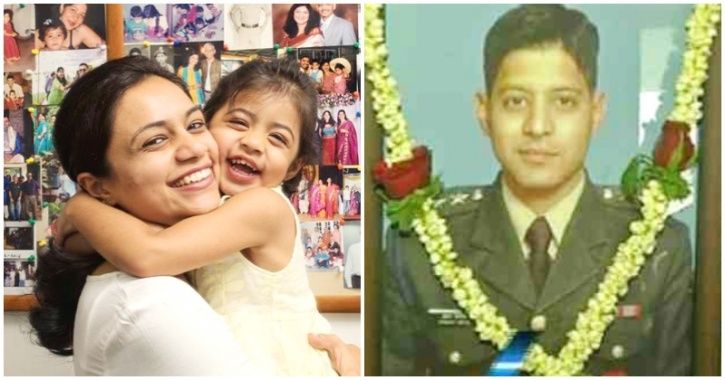
Wife Of Martyred Soldier Writes A Poignant Facebook Post On Life Without Husband, Goes Viral

The entire nation cries and mourns the death of a martyred soldier, but how many of us care about what happens when he dies? How many of us know the struggle of those who are left behind- wife, kids, parents?

Not many.

In a poignant Facebook post, wife of Nagrota martyred Major Akshay Girish Kumar writes about the struggle of living without a husband. Sangeeta Akshay Girish shares experience and tell the world about the life of a family who's lost someone to country's protection. 


"I got his uniforms, clothes and all the stuff we collected over the years in a truck. I tried hard to fight back my tears. I haven't washed his regimental jacket and when I miss him a lot, I wear it. It still smells of him." she writes.

Wednesday, September 6, 2017

A modern interpretation in a classical way


For Janani Murali, dance and Indian mythology take on a new meaning in her latest performance

Classical dancer Janani Murali dons many hats – entrepreneur, biologist, writer and mother. Daughter of renowned dancer Padma Murali, Janani sticks to classical dance boundaries in form, but looks for contemporary ideas in presentation. The beauty is she uses stories from Indian mythology to do this.

Trained in the Pandanallur style of Bharatanatya, the dancer is in the news for her choreographed solo piece, Savitri – Narratives of the Heart with which she has travelled across the country and abroad.

The young dancer talks to Metroplus abouther passion for dance and how a change in one’s thought process can bring in different perceptions to our age-old stories.

Excerpts:

When did you start dancing?

I don’t remember when, but my brochure says I started off when I was five. I remember dancing forever. I learnt from my mother. I also worked in the pharmaceutical industry as a researcher and majored in biology and chemistry. Balancing dance and studies was not stressful at all. There was never a compulsion for me to do anything in my life. Dance has always been a constant. There was never a point where I had to decide to do this or that. So, I went on to do research and continued dancing. I gave up research when my daughter was born in 2011. I took a break from the nine-to-five job and decided to work from home. If you think working from home is a good thing, you have another thing coming.

You are working constantly at odd hours. It was getting stressful and that is when dance happened.

How did your solo piece ‘Savitri...’ come to be?

Last year, when I was trying to decide what next, I came across the story of Sati Savitri. The story was a revival, in a sense, since my mother had presented it years ago. I wanted to revive that production with a new perspective. It is very different from what she presented.

What prompted you to revive the story?

Some childhood stories stick in your head. This was one of them. There were many questions in my mind as to why and what about Savitri. I wanted to take it beyond just the story. Bharatanatya is a narrative of stories. I started thinking ‘why does it have to always be a lovelorn nayika and all about jeevatma and paramatma? People also question us as to why we always present the nayikapining for her beloved. Especially, with so much talk on feminism happening, it also gets you thinking, ‘what am I presenting to my audience?’

How did people react to the presentation?

These characters are metaphors, which are really lost to us. We have to tell the audience about them so they can relate to them. The story is about the metaphors of destiny, desire and love. You also wonder if there is something called divine love. The audience asks us these questions. And I am glad that they do, for they too have grown in varied ways. And their questioning helps us to look at new angles as artistes. Then a dance becomes a communication rather than just a performance. That is the beauty of Indian mythology and classical dance. It can remain a simple story or go beyond, depending on how you think. They may be ancient, but can be interpreted in many modern ways.

Teen puts virginity up for sale on website where it's verified by a doctor and buyers can also do their own tests


A teenager is putting her virginity up for auction on a website where doctors will verify to potential buyers that the girls have not had sex.

The 18-year-old, named only as Kim, is hoping to sell her virginity so that is able to pay for university, as well as buy a flat and a car.

According to German local media she contacted a specialist escort agency selling virgins for millions with the words: "Hello, my name is Kim and I would like to sell my virginity."

The young woman , who is half Austrian and half German, wants to study somewhere in Germany or in the Austrian capital of Vienna.

Potential buyers can also carry out their own 'inspections' on Kim 

Kim was inspired by Aleexandra Khefren who sold her virginity for £2million 

She decided to sell her virginity to finance her studies, a flat and a car.

According to the Cinderella Escorts website, her virginity is proven with a doctor's certificate and a potential buyer can also do their own tests to "inspect" the girl.

On their website, Kim states she likes drinking orange juice and loves Greek food and roses.

Kim said: "I would like to study in Germany or Vienna. With the money I can buy a flat, pay my tuition fees and afford a car."

A doctor will verify Kim's virginity to potential buyers 

Kim wants to finance university with the money, as well as buy a flat and a car 

The student was inspired by Aleexandra Khefren, a 18-year-old Romanian model who sold her virginity for €2.3million (£2million) to an unnamed businessman from Hong Kong.

News about Khefren and the virgin escort agency went viral across the world and also came to the attention of Kim.

She said: "So is it really worth more than €2.3million to give my virginity to a man who might eventually leave me anyway? To be honest, I do not believe it."

Kim says she is willing to meet with the highest bidder anywhere in the world as long as all travels are paid for.

Kim says she will meet the highest bidder anywhere in the world, as long as they cover her travel costs

Bidding for the Kim starts at €100,000 EUR (£86,640), of which 20% goes as a fee to Cinderella Escorts, according to local media.

They reported that the man behind Germany's most famous escort website is a 26-year-old obese German from Dortmund who still lives in his mother's basement.

Jan Zakobielski outed himself as the man behind the multi-million pound operation which he runs from his parent's house, both of them unaware of his business.

Zakobielski said: "No one makes these young women do anything they don't want to do. They have their own minds and their own opinions on sexuality."

‘Nothing sexual’: Naked maids wanted to clean homes, £45 per hour


A naturist cleaning company is offering £45 (US$55) per hour for women willing to work entirely in the nude.

London-based Naturist Cleaners is on the hunt for women willing to clean, dust and vacuum homes around the country, wearing nothing but slippers and gloves. 

The firm, which offers naked cleaning services for the nudist community, charge clients £65 for the first hour and £55 each hour thereafter, and must agree to a strict “no touch” and no pictures or video policy.

There are three services: one with the client nude, one with the cleaner nude, and the option of both.
An ad, posted on Facebook, reads: “We are looking for female naturist cleaners who can clean private houses nude.

“The job will require doing all general cleaning like dusting, tidying up, vacuuming, watering plants, making beds, using the washing machine, ironing clothes and cleaning windows.”

The company, which is looking for part-time cleaners of “all ages and figures,” began in London two years ago and is now expanding outside the capital. Local ads are springing up in places like Peterborough, Surrey and Southport.

Owner Laura Smith told ITV she had the idea after a nudist asked if he could be naked while she cleaned for him.
“We started in London two years ago and it’s proven really popular, so we’re expanding.

“It’s a service for the nudist community. We are a cleaning company. There is nothing sexual about the business at all. The majority of our clients are nudist.

“I understand people will think certain things about the company, but there is nothing untoward about it.”

In a blog post on the company’s website, it says: “There is nothing out there that even comes close to the unique, fun and exciting experience of hiring a maid for a nude cleaning service.

“It’s the kind of experience you never forget, and it’s the kind of experience that can keep a huge smile on your face for the rest of the week.”


Thursday, August 24, 2017

12 Ways to Be the Leader Everyone Wants to Work For

It’s not easy being a manager these days. You’re responsible for recruiting, hiring, training, coaching, modeling, engaging, monitoring, motivating, anticipating, prioritizing, planning, evaluating, clarifying, adapting, envisioning, directing, disciplining, reinforcing, reporting, recognizing, budgeting, and building alliances. And that’s all before lunch. And if you struggle with just one, your reports will say you’re over your head.

For some, a management role is the route to power, a means to intimidate critics and indulge supporters. Others view it as a ticket to the easy life, with days spent combining spreadsheets and distributing communiqués. But talented workers rebel against the former and ignore the latter. They want to make big things happen and advance their careers. They press and produce, disregard and defy, question and create. These people want to work for leaders, not managers. And they ask the question that managers fear most: Why.

As a leader, that’s the same question you should ask: “Why would anyone follow me?” It takes courage to step up to lead. But no one will follow if you’re not leading for the right reasons. Talent seeks out other talent. And talented employees want leaders who can open their worlds and make them better. So what kinds of leaders draw and develop the best talent? Generally, they possess many of these qualities:

1) Service Mentality: You hire people to make your job easier. You probably imagine how they’ll free you up to pursue those big picture projects. Sure, your employees are here to serve you. But it runs both ways. To lead talented people, you must focus on serving them. Your job is to level obstacles, to clear a path free of distractions (and excuses). You streamline processes, find resources, and keep the political nonsense at bay. Bottom line: You figure out what holds them back and fix it. By putting their interests front-and-center, you eventually make work easier on yourself too.

2) Juice: Want to know the worst word ever associated with a leader? Gutless. Talent expects their leaders to have clout. No, I’m not talking about those sycophants who go along to get along. They may be savvy and practice good politics, but ultimately no one respects them. And courageous leadership certainly isn’t executing a plan. That takes vision, focus, and stamina, but real courage – guts – means you confront issues, no matter how unpopular it makes you.

That means you don’t look the other way when your superiors adopt shady practices or engage in conflicts-of-interest. You stand up for what’s best for customers, employees, and society, unafraid to put your job on the line. You manage up by championing the important ideas and picking the right battles. You’re deft when the stakes are small and direct when they’re larger. And you’re oh so visible by staying out front. In business, that gives you juice: The credibility that commands attention and compels others, top-to-bottom, to take you seriously.

Talented people are naturally rebellious. To them, popularity is nice; influence is a means; acting honorably is the ideal; and getting things done is the point. And the best people want to work for someone who shares that spirit – and has the juice to turn ideals into business-as-usual.

3) Experience: Everyone has to start somewhere. But gifted people really care about where they want to go. And they’ll choose you if they believe you can get them there. They’ve done their homework. They know you were once a young striver like them. But you made it – and they want to see how it’s done. So take some time to help your people understand the business. Expose them to every part of the operation to round off their skills. Your best people want to climb. Like it or not, this job is temporary to them. Develop and groom them. Give back and make it worth their while. They’ll only perform better if there’s something bigger in it for them.

What’s more, plug them into your network. Help them find new connections and mentors – and you’ll get better solutions faster. Fact is, you’re growing your “tree,” preparing your protégés for greater responsibilities in other divisions (or the larger world).

Alas, jobs and good fortune are temporary. You may someday need your prized pupils for a reference (or a job). Pay it forward now.

4) Personal Attention: You know the drill: Give the new hire a laptop and tell him to go “make it happen.” And it often fails. To become a great leader, you must make your reports’ success into your personal mission. The best leaders are always out talking to their people. They take the time to coach and train, knowing neglect only reinforces bad habits, stagnation, and disengagement. They provide regular feedback on performance, knowing the best people crave candidness and loathe sugarcoating. Most important, these leaders pay attention. They care about their people and stay in touch on a personal level, knowing their inner lives influence their success as much as any guidance. That’s how they know when to push and when to pull back. Bottom line: The best leaders make their reports feel valued – or inspire them do those things that’ll ultimately make them feel better (and make your organization run better).

5) Openness: Want to know what separates the great leaders from good ones? The great ones are always learning – and so are their people. You can’t level off once you get some authority. And that’s one area where true leaders excel. They’re constantly asking questions, insatiably curious and never satisfied. They aren’t wary of people with different backgrounds and greater expertise – They utilize their abilities. And they recognize that change isn’t a threat, so they adapt to it (Even lead it). Most of all, they understand one of the oldest maxims of leadership: The fastest way to lose credibility is to lose touch with what’s happening – and show no interest in catching up.

Talent is always looking for a way to say yes instead of no. So leaders listen. They aren’t afraid of bad news and criticism, even when it reflects poorly on them. They’re open to constructive disagreement and debate, knowing it ultimately leads to possible alternatives. They don’t hold grudges or rub someone’s nose in it when he’s wrong, focusing instead on what was learned and moving forward. In short, real leaders absorb input and take action. Why does that matter? Even when they lose, talent knows their voices were heard and the process was fair. And that keeps them thinking, inventing, and coming forward.

6) Space: You know this all too well: Talent doesn’t color inside the lines. And they quickly tire of taking orders. That’s why top leaders give their people ownership. They don’t stand over them. They get out of the way, turning them loose to explore, test, discover, and interpret. Their role is to ask questions and guide their people towards finding choices. In other words, they give their people space to figure out how to solve issues themselves. That’s how people learn. And that’s how you can prepare your team for more complex and ambiguous issues.

The best leaders operate from trust. They don’t constantly second guess. They understand you can’t control every variable. When mistakes happen, they back their people up instead of sacrificing them. Through their belief and support, they give their most effective people permission to do what they do best: Make things happen. In return, they get their loyalty.

7) Excellence: Great leaders don’t “demand” excellence. That’s already established by the example they set. Put yourself in an employee’s shoes. When you work for a true leader, you know the bar is set high and big things are expected – every day. Your leader is always asking, “Is this the best we can do?” She makes you set goals to keep you focused and out of ruts. She pushes continuous learning to keep you sharp. And she demands results, regardless of precedents, politics, and predicaments.

Sure, you resent the occasional excesses, but you also know that your leader holds everyone accountable for sharing the load. If she plays favorites, it’s strictly on the basis of performance. Most of all, she recognizes limits. She understands that you probably can’t do what she could in her prime. But she also knows that it’s her job to nudge you to that level. That’s why her team – your team – outperforms everyone else. And that’s what it takes for you to do the same year-after-year.

8) Bring Out the Best: Every morning, the best leaders commute to work asking this question: “How am I making my people better?” How can you do that? You start by not pigeonholing your people. When you look at an employee, don’t focus on what he can’t do or what others say about him. Look at he can do – and what he could do. Most times, they’re capabilities that he didn’t realize he had.

You see, the best leaders don’t just hire people for today. They also weigh their potential. They keep their eyes open for personal interests, since that’s where their people will ultimately find their underlying abilities. Knowing that, leaders seek opportunities to help their talent build confidence. Even when their people fall short, they know it takes time, trial, and error before they finally flourish. In short, superior leaders see what others can’t because they look for it. And they push their people to a level they couldn’t envision on their own. And they reap the rewards as a result.

9) Passion: Talented people want to be part of something bigger. They dream of saying, “That’s me. I helped create that.” But they know such big moments are rare. Well, great leaders recognize those moments and capitalize on them. You see, you can’t rev up talent with a rah-rah speech, no matter how much conviction you have. Your people are adults working in the big leagues. They want to know that they’re part of a greater purpose, with leaders who have a vision and a plan for making it a reality. They want to feel essential, to see their ideas and sweat produce something significant. Most important, they want to share in the benefits (and receive some credit). People come-and-go in business, including you. That’s why you must focus on building loyalty to a mission that ultimately outlasts you.

Of course, buy-in – and the passion it produces – requires more than talent knowing where the organization is going and why. It also stems fom the day-to-day. People can only pump themselves up so much. That’s why leadership requires you to bring a contagious enthusiasm. Talent is always looking for positives and progress. And they want to laugh and have fun in the process. But a purpose only brings people together for so long. As a leader, your job is to be the person who reminds everyone why they still work here; why their work is still relevant; and what they (and the larger world) will gain from their continued affiliation. That entails more than delivering a few carefully-calibrated phrases. It means reinforcing your message, with every interaction, in both word and deed. That’s commitment. That’s passion. That’s leadership.

10) Fairness: Ever notice how most ‘boss’ humor involves double standards? From Dilbert to Meeting Boy, we hold leaders to standards that we ourselves cannot meet. Leaders and followers are hypocrites alike. That’s the human condition…and it’s comical and tragic. But true leaders – the ones who inspire loyalty, trust, and excellence – work to hold themselves responsible to the same rules as those they lead. They don’t lead from on high or from behind: They lead by example. And they view their people as equals – and don’t mind getting their hands dirty with them.

Yes, leaders have rules. But they can accept deviations and mistakes, provided they stem from the right intentions. They focus on their own behavior before judging others. And they weigh what’s important and what’s not. That’s how they know what’s truly fair. And that’s how their people know they’re being treated fairly too.

11) Consistency: You never have to wonder with good leaders. You know what to expect. They’re reliable and responsive. They deliver on what they promise. In adversity, they remain composed and focused, so others control their emotions. They don’t point fingers; they gather facts and take action. Bottom Line: They understand that everyone takes their cues from them. And they act in the same way they want their people to react.

You’ll hear experts claim talent, culture, and strategy makes-or-breaks companies. That’s true in the macro sense. In the micro world, success is all about relationships. That starts with trust. And trust is grounded in consistency and character. The best leaders are genuine. You always know where you stand with them. They don’t carry hidden agendas or say one thing to you and something else to another. They boil decisions down to what’s in the best interests of employees and customers, not what’s easiest or most profitable. And they make themselves approachable and available. They recognize that keeping doors open and confidences private supplies them with a resource most leaders sorely lack: Reliable information.

12) Recruiting: Talent is drawn to other talent. And the ability to attract the best people is one way leaders measure themselves. Great leaders are constantly looking for new talent who fit with what they need now…and where they want to go. These days, anyone can attract good people from failing competitors and disrupted industries. Question is, can these leaders keep that talent productive and happy? Have they fostered a culture where talent is developed and valued – or does their pitch belie a sweatshop mentality where people are used up like commodities? Either way, you’ll have turnover. But would you rather be a manager who squeezes people into roles or a leader who grooms talent to become bigger than their roles? Believe it: Word gets out. And when you get results and help people get where they want to go, a funny thing happens. Talent goes on the look out for you.

Thursday, March 16, 2017

Tamil Nadu farmers vow to continue protest at Jantar Mantar


More than 150 farmers from Tamil Nadu have staged a protest in the national capital, demanding that the Centre declare a drought relief package and loan waiver for peasants from the southern state.
Already into the second day of their protest at Jantar Mantar, the farmers from Tanjavur and Tiruchirapalli in the state's Cauvery belt have warned that they will continue with their stir until the government gives them a hearing.
"We started our protest yesterday, but no one is ready to hear our issues. We are not planning to give up the protest until we are invited for talks by the Centre," said Iyyakannu of Desiya Thenninthiya Nathigal Inaippu Vivasayigal Sangam.
"We have no option other than protesting till our demands are met," he said.
Around 170 'half-naked' farmers arrived at the PM's residence on Lok Kalyan Marg yesterday with skulls of farmers who allegedly committed suicide and begging bowls to mark their protest.
"We want the Centre to announce Rs 40,000 crore of drought relief package, announce farmer loan waiver and assure us better support price for our produce," Iyyakannu said.
The protesters also demanded for unification of river.
"Though the state had sanctioned a drought relief package, it does not provide any relief as we are in deep crisis," said Iyyakannu.
Early this year, the National Human Rights Commission (NHRC) had sought a detailed report from Tamil Nadu after it took suo motu cognisance of media reports regarding the deaths of 106 farmers during a period of one month in Tamil Nadu.
On February 22, Chief Minister Edappadi Palaniswami sanctioned a sum of Rs 2,247 crore as drought relief to more than 3.2 million farmers.

Tuesday, January 24, 2017

Jallikattu Back, Why Not Kambala, Asks Karnataka. Protests Begin

After protests in Tamil Nadu managed to achieve a reversal of the ban on bull-taming sport Jallikattu, many in Karnataka are demanding focus on Kambala -- a traditional sport in which water buffaloes are made to race down a track filled with mud and water. Under the same order in 2014, the Supreme Court had banned both Jallikattu and Kambala following complaints by animal welfare groups, which had pointed to the cruelty and stress inflicted on the animals in both sports.


Kambala used to be held in coastal regions of Karnataka. It was especially popular in Udupi and Dakshina Kannada districts. In Kambala, two water buffaloes, yoked together, were made to run at top speed down a muddy, water-filled route. They were guided and whipped along by a man who ran with them.  

Activists had pointed out that water buffaloes are not built for speed and it is unnatural to make them run in such stress-filled conditions.

Vatal Nagaraj, a former legislator known for his many protests on many different issues, took to the streets of Bengaluru to demand that Kambala be restored to the people.  

Another protest was held at Bengaluru's Freedom Park on Sunday. Like their counterparts in Tamil Nadu, Kannada film actors are also responding to questions on the issue, saying Kambala should also be allowed in Karnataka. Leading actors like Shivraj Kumar and Yash have come out in favour of its restoration.  Politicians, too, have lent their voices to the demand.

As in Tamil Nadu, social media is also playing a role. 
  
Last year in November, the Karnataka High Court had banned Kambala races following a public interest litigation filed by PETA.

Jallikattu row comes to rest: 10-point timeline on what led to legalisation of bull-taming sport

After week-long protests, the Tamil Nadu State Assembly on Monday overturned Supreme Court order banning controversial bull-taming sport of Jallikattu. The assembly passed a bill replacing an ordinance to legalise the bull-taming sports. After clearance of the bill, the row is expected to come to an end. The sports, which was legalised by state, was banned by the Supreme Court in 2014, then what led to violent protests two years after? Here's is 10 point timeline of the entire Jallikattu row.


Here is a 10 point timeline on what led to legalisation of Jallikatu row:

1)PETA (People for the Ethical Treatment of Animals) and AWBI (Animal Welfare Board of India) first filed a plea against Jallikatu in the year 2004. In 2010, the apex court allowed cultural sport to be played for a period of five months in a year. However, it completely banned Jallikattu in 2014.

2) In June, 2016, the issue once again came in front of Supreme Court. A bench headed by Justice Dipak Misra issued an order warning the Tamil Nadu government, for carrying out the sports. "Jallikattu cannot be merely allowed just because it was a century-old tradition. Whether it shall be continued will be decided legally," Justice Mishra said.

3) However, O Panneerselvam who took over as the Chief Minister after Jayalalithaa death, had vowed to start Jallikattu again on the auspicious day of Pongal. The state once again filed a fresh appeal to allow Tamilians organise Jallikattu.

4) However, the bench headed by Justice Dipak Misra and Justice Banumathi on January 12, 2017, agains declined to issue an interim order to allow Jallikattu just before Pongal. The bench had remarked, ?Though the draft of the judgment is ready, it's not possible to pass the verdict before Saturday when it is to be held. We also want to say that it is unfair of the petitioner to ask the bench to pass an order."

5) The centre, led by Prime Minister Narendra Modi, cleared an ordinance on Thursday which legalised Jallikattu was cleared by the centre. Following a request to clear ordinance, Prime Minister Narendra Modi on Friday said that all efforts are being made to fulfil the cultural aspirations of Tamil people.

6) The state government, after receiving Centre's assurance on its support for efforts to conduct the sport, had followed the constitutional route and issued an ordinance amending the relevant provisions of Prevention of Cruelty to Animals Act, 1960.

7) A special Assembly session was called by AIADMK regime after Tamil Nadu Governor C Vidyasagar Rao approved ordinance to legalise bull taming sports on Sunday. This was the first legislative House proceeding after the demise of former chief minister J Jayalalithaa.

8) Celebrities including Rajnikanth and Kamal Haasan expressed their concerns over state's law and order situation. "At this juncture, I am grieved to see certain incidents," Rajnikanth said in an apparent reference to the violence and the police crackdown. Haasan and Sri Sri Ravinshankar also appealed for peace.

9) Earlier in the day: Weeks long protests demanding leagalisation of bull-taming sports turned violent. The agitators went on a rampage, setting vehicles on fire at a few places, including in front of Ice House Police Station near the beach.

10) Jallikattu Bill passed by Tamil Nadu Assembly unanimously. Bull Taming in the state of Tamil Nadu has been legalised. Supreme Court ban overturned.

Meet the real-life MERMAIDS giving up their day jobs for a permanent life in the sea


This is the community of men and women who are giving up their lives on land for a permanent sea life as mermaids. Gaining followers across social media, the group have decided to make more of a life in the ocean, and even wear silicone fish tails to swim through the waters.

The community is making waves in Seattle, Washington, where Ed Brown, Tessie LaMourea, Morgan Caldwell and Caitlin Nielsen are members. Caitlin, also known as Mermaid Cyanea, quit her job in 2015 to concentrate on being a mermaid full-time . The biology graduate uses her identity to promote her passion for ocean conservation and her knowledge adds realistic details to her mermaid persona.

The community of merpeople is growing rapidly in Seattle The 32-year-old from Seattle spends her time swimming in lakes and posting videos and photos to her online following. She also has a workshop where she crafts handmade silicone mermaid tails. Caitlin said: "When I was in kindergarten and the teacher asked everyone to go around and say what they wanted to be when they grew up, I said 'a mermaid.' "Everyone laughed at me and now here I am - I'm a mermaid. I'm literally a real life mermaid. "What inspired me to be a mermaid is hard to say. It's actually the fact that I've always felt I was a mermaid.

"Ever since I saw Disney's Little Mermaid when I was very young and I also watched the movie Splash with Tom Hanks and Daryl Hannah. "Both of my parents are marine biologists, so I grew up knowing a lot about the oceans, spending a lot of time at the sea shores and really feeling like I was meant to be in the ocean, so when I saw mermaid movies it sort of resonated with me." Caitlin identifies with being a mer-person so much that she likens her glimmering scales to a prosthetic limb. She said: "I do feel like my tail is a part of me, and I do actually feel like it is a prosthetic limb. "I sometimes joke that I wear a prosthetic because I was born with a terrible birth defect - which is legs.

The merperson identifies as asexual and prefers to be known by the pronoun 'they' "When my tail is off I feel a little bit awkward. Suddenly I have legs and I don't know what to do with them. I feel extremely clumsy." There is a prevalent mer-community in Seattle. Her friends Ed Brown, Tessie LaMourea and Morgan Caldwell also identify as part-fish-part-human. Being a merperson isn't just a hobby for Ed, it has become a lifestyle. Ed also identifies as being a non-binary, asexual person. The 24-year-old prefers to use the pronouns 'they' instead of 'he.' But becoming a merperson has helped the Disney fan come to terms with their sexuality and the social anxiety it caused.

Ed said: "The best part of being a merperson is the chance to live out a dream or fantasy that a lot of people, especially kids, have. You know you can put on a costume and become a magical creature and be something other than who you are for a little while. "I'm still being me but I'm being more of myself than I might feel comfortable with just in my day-to-day life." As well as working on a boat, Ed - whose mer-name is Mahtlinnie - also lives on one, and spends most of his spare time effortlessly sliding through the water. Like Caitlin, Ed was inspired by the idea of becoming a merperson as a child, particularly after watching the Disney film The Thirteenth Year. Ed said: "Most merpeople have a movie or TV show that inspired them." Ed believes being the mythical-being is a chance to live out a dream, or fantasy, which allows them to temporarily escape from reality.

They added: "You know you can put on a costume and become a magical creature and be something other than who you are for a little while." Environmental policy student Tessie agrees. She was inspired to become a mermaid ever since she attended a magical mermaid school in the exotic Philippines three years ago. And once she slides her tail on and becomes Mermaid Essie, she claims her worries disappear and the magical feeling of invincibility and power arises. Tessie, 24, said: "I have a lot of body insecurities , I think a lot of people do. When I am in my tail I don't feel insecure anymore. Because it suddenly doesn't matter what size I am because I am a mermaid and that is what people really focus on. "When I take my tail off it almost feels like a piece of me has come off, that I am in a weird limbo. It's very vulnerable feeling. It is an odd feeling for sure."

Using her mermaid status, she tries to promote ocean conservation and raise awareness through education. The mermaid trio frequently swim together and join each other on themed photoshoots. Ed said: "When I'm in the water with my tail on, it's just like magic. "I could never have a bad day swimming, no matter what happens. If I put on my tail, I have done swimming, it's automatically good day." As well as raising a few eyebrows at the local swimming pool, the merfolk's friends and family have had to get used to the idea of having a fishy friend. Although Tessie's mother is supportive, she finds the concept of being a mermaid ridiculous.

 
Tessie said: "When I told my mother that I wanted to be a mermaid, she just kept laughing at me. She thought it was hysterical and she never thought that I will actually end up doing it." Tessie's mother Cora LaMourea, said: "I thought it was a stupid idea first. I thought it was just going to be a waste of money and a waste of time. I thought her time could best be used studying as a graduate student than swimming with a tail." However, overtime, Cura has come to accept her daughter's passion to be a mermaid and has even attended a mer-retreat and slipped on a tail herself. She said: "I think she is in fantasy land when she is in her tail. It's different than the reality of the hustle and bustle of being a graduate student. In the water she feels free, she feels there is nothing else more important than just swimming and be enjoy the moment." Although Caitlin isn't married to a merman, her human husband, Kim Lomman, proudly tells everyone that he's married to a mermaid. Caitlin said: "My husband thinks it's really awesome that I'm a mermaid. He has known about it since we first met.

 
which inspires them "I'd probably look for merman boyfriend if I wasn't already married to a human." Kim said: "I think it was one of the first things she told me. At the time I had no real understanding of what that meant but she didn't seem too crazy so I just went with it. "I have been a part of a couple mermaid get-togethers, as support, helper, and photographer. "I'm proud to be married to Caitlin and mermaiding is a large part of who she is." One of Ed's neighbours, Thor Radford, claims the first time he saw Ed swimming alongside his boat, he thought it was a dolphin. Thor, 47, said: "Everyone knows we get seals and what not, they will come into the lake and here comes this giant tail and up pops Ed. It shocked me, it was crazy." Being part of the mer-community isn't just a phase for this trio, it is a way of life for now and forever.

Tessie said: "I do always see myself being a mermaid forever." Caitlin added: "Being a mermaid, I don't feel that I'm hiding anything I really do feel like I'm being the true me." Caitlin, Tessie and Ed have dedicated their lives to becoming 'merfolk', and say they are never happier than when they are frolicking in the foamy waters.

Thursday, January 12, 2017

7 Things That Don’t Impress Me Anymore - Joshua Becker

Joshua Becker about a measure of success and respectability in the modern world:
I began to look at the world a bit differently since I decided to keep less stuff. I looked from another point of view on how the society measures a success. Too often those who earn, spend, and save more than others automatically become "successful."
But it’s bad. I know several wonderful people who decided not to focus on material things — and that’s why they are not considered to be successful.
The dependence on public approval has run deep in our mind. That’s why many people look for ’worthy’ occupation, building a face of their success.
Here’s a short list of things which don’t impress me anymore:

1. Fashion label

I’ll never understand why a brand on the label is so important. People pay to be a billboard on two legs far too often. I’m not surprised to see a logo on a shirt, a wallet or watch. Instead, I admire those able to impress with their personality or character.

2. Number of carats in jewelry

There’s a chapter in my new book about Brian and Nicole, who are married for five years, and they refuse something every day to pay off a debt for an engagement ring. Maybe someone admired the gem’s size, but most people didn’t even notice it. Was it worth such efforts?

3. Price of a car

Sure, safety is a thing of extreme importance, especially if we spend the majority of time driving. But now, high-priced and sports cars become more than just a transport: it’s rather a good way of causing the strangers’ admiration for 60 seconds on the stoplight.

4. Square footage of a house

Private houses provide us with stability and calm, and I was really proud buying a house for my family. But several years ago, we moved to a smaller one, and I haven’t regreted it, not even once. When I drive by big mansions I remember how happy my family is in our small, but cozy home.

5. The size of a bank account

Nowadays, the absolute measure of success is the size of personal wealth. We’re not the first applying this criterion: similar standards existed at all times. But maybe the size of our bank account isn’t an appropriate measure for success? Maybe a number of good deeds we’re able to do during our life will be a better measure?

6. A model of a smartphone

Recently, I was walking in the park with my children and their friends. I was flabergasted that their main topic were technologies. Which iPhone do you have? What number iPod is that? Guess who got a new smartphone on their B-day? Children under the age of ten spend time discussing modern technologies. I was ready to interrupt them, but remembered just in time that adults, actually, are just the same.

7. Photos on social networks

Almost everyone publishes beautiful pictures from his/her life — from new clothes and restaurant food to photos from concerts and airplane wings. These pictures are sifted through, and the best of them are published. It’s weird that then we accuse glossy magazines and advertising of an excessive use of Photoshop while we always edit our lives before sharing them on the Web.
Let’s try to impress and inspire people around us not with our things, but with our own lives and experiences.

Men And Women — We Are So Different

Draw funny and honest comics about the differences between men and women. And yes, we’ve got our peculiarities, but remember, the main thing is that even though we’re different, we just can’t live without one another.


Tuesday, February 9, 2016

The Chinese Dragon: a Symbol of Strength and Power

As is an imaginable paws of the tiger, the beard of the goat, the scales of the carp and the belly of the snake. According to legends, the Chinese dragon is able to breathe fire, summon wind and call for rain, fly into the clouds and hide at the bottom of the sea; it's also capable of becoming as large as the sky or disguising itself by being as tiny as a pinhead.

Unlike castle-burning dragons of Western stories, Chinese Dragons are a benevolent symbol in Chinese culture. From celebrations to the Zodiac, to historical rulers, the dragon has played a large part in China’s rich history.
Symbolic Value

It was said that Yangdi (a legendary tribe leader) was born by his mother's telepathy with a mighty dragon, who, with the help of the dragon, allied with Huangdi (a legendary tribe leader) against Chi You (a legendary barbarian tribe leader) and defeated him in the battle of Zhuolu (presently Yuncheng of Shanxi Province), opening the prelude to Chinese civilization; so Yandi and Huangdi were considered as ancestors of the Chinese people. As time has gone by, the Chinese people refer to themselves as the descendants of Yangdi and Huangdi, as well as the descendants of the dragon.
Dragon Legends
Nine Dragon Wall at the Forbidden City, Beijing

In Chinese lore, the dragon was a benevolent creature with powers to bring rain, floods, and even hurricanes to a land. Along with this ability, the dragon signified power, strength, and good luck. Starting in the Han Dynasty (206 BC – 220 AD), Emperors took on the symbolism of the Dragon as they hoped to bring good fortune to their lands.

The number 9 is considered lucky in Chinese culture, and this fact is reflected in the depiction of the Chinese Dragon. Nine different animal resemblances make up the appearance of the Chinese dragon.

The scales of a Chinese dragon further display the significance of lucky number 9. It is said that dragons possess scales of both the yin and yang essence, with 81 and 36 scales respectively, both numbers being multiples of 9.
Origin of the Dragon

A number of legends concerning the origin of the dragon emerged in the course of Chinese history, of which the Totem-Worship Theory is more popular than the others. A totem is an object (such as an animal or a plant) that serves as an emblem or protector of a tribe, reminding them of their ancestry, and the tribe firmly believes that they are related by blood to a certain animal. Almost every tribe had its own unique totem in ancient times. It was said that Huangdi fought with Yandi for the throne after the demise of Chi You, which ended up with the victory of Huangdi who adopted an imaginary dragon for his coat of arms. Later, Huangdi launched a series of wars against the nine tribes on the Yellow River Valley, and incorporated the other tribes' totems into his own after defeating them (thus explaining why the dragon has attributes of nine other creatures), claiming himself to be monarch of the central plains of China after his great unification. The dragon totem has been popular throughout China ever since.

Children of the Dragon
Sculptures of the nine children of the dragon, Forbidden City

According to Chinese myths, the dragon has nine children (not including mortals, such as the legendary Yandi): Bixi, Qiuniu, Yazi, Chaofeng, Pulao, Chiwen, Bi'an, Suanni and Pixiu. More interestingly, the nine dragon children have different characters from one another, and their images (to be more specific, imaginary images) are widely used in architectural decoration, especially in the imperial palaces.

Bixi, the eldest of the nine dragon children, has the shape of a turtle with sharp teeth, and is fond of carrying heavy objects; it's often depicted on the sides of grave monuments.

Qiuniu, a yellow scaly dragon, has a liking for music and excels in playing it; it's often used to adorn musical instruments.

Yazi, with a snake belly and a leopard head, is keen on fighting and killing; it's often used as the decoration of sword grips.

Chaofeng has an instinctive taste for adventure; it's often used to adorn the roof ridges of palaces.
Pulao is known for its loud crying; it's often used as handles on the top of bells.

Chiwen, living in the sea, has a harsh voice and takes delight in devouring the other creatures; it's often erected on the ends of ridgepoles of palaces.

Bi'an has a fancy for lawsuits, so it's often erected at jail gates.

Suanni has a shape of a lion and takes delight in sitting cross-legged and smelling the odor of incense; it's often depicted on the incense burners and seats of Buddhist temples.

Pixiu is fierce and majestic with a horse's body, and it's in charge of exorcising the demons to keep Heaven safe; it's often used to guard gates.

Development of Conceptions of the Chinese Dragon

In the Shang Dynasty (1600 BC-1046 BC), the dragon existed as a supernatural power in the mind of ancient people, and it was worshipped as a two-pawed prodigy owing to its ferociousness and mysteriousness.

In the Zhou Dynasty (1046 BC-221 BC), the image of the dragon was greatly weakened owing to the emergence of the image of the phoenix, and the phoenix coronet was even grafted on the head of the dragon in some patterns, making the dragon more feminine (Yin) and artistic. 

In the Spring and Autumn Period (770 BC-476 BC), the image of the dragon became more vivid, featuring a combination of Yin and Yang, which was widely painted as an emblem of good augury with four paws, and it looked more powerful and masculine (Yang).

In the Qin (221 BC-207 BC) and Han (206 BC-220) dynasties, the image of the dragon was basically finalized in its essentials, featuring long horns, pointy ears, sharp paws and a snakelike belly. Qin Shi Huang (259 BC-210 BC) claimed himself to be the son of the dragon during his reign, as the dragon had become the monarchial power incarnate.

In the Sui (581-618) and Tang (618-907) dynasties, the dragon was depicted as a prodigy with the belly of a carp, so the scholars who succeeded in the civil service examination were often compared to the carps that jumped over the dragon gate.

In the Song (960-1279) and Yuan (1271-1368) dynasties, the image of the dragon became more artistically perfect, playing an important role in traditional Chinese paintings, which were of a high aesthetic value.

In the Ming (1368-1644) and the Qing (1644-1911) dynasties, the image of the dragon became a tool and a symbol of imperial power, which was exclusively for emperors. The dragon was painted with five paws in the Qing Dynasty (1644-1911).

Culture on Chinese Dragon
Chinese dragon dance

The Chinese dragon has transformed from an imaginary prodigy to a mascot from ancient times to the present, representing the Chinese people's unrelenting and pioneering spirit of keeping pace with the times, whose image has been deeply rooted in the mind of the Chinese people and has a substantial influence on various aspects of Chinese culture. Not only is the dragon prevailing in China, but it's also very popular among the Chinese people living overseas; it has become the symbol of China and of Chinese culture.

The dragon culture is great, because it earns respect from its descendants (the Chinese people); the dragon culture is encouraging, because it symbolizes the unrelenting spirit of the Chinese people; the dragon culture is profound, because it represents Yang according to the Five Element Theory; the dragon culture is exclusive, because of its imperial culture in essence in the history of China; the dragon culture is also open, because it makes great contributions to world civilization.
Dragon and Ancient Celestial Guardians

As one of the four celestial guardians, along with the vermilion bird, the white tiger and the black tortoise, the dragon represents the east and the element of wood according to ancient Chinese astrology and the Five Element Theory; the vermilion bird associates with the south and the element of fire; the white tiger symbolizes the west and the element of gold; the black tortoise signifies the north and the element of water.
Dragon and Chinese Zodiacs
Chinese zodiac sign, dragon

Every new year of the Lunar Calendar is represented in Chinese mythology by one of 12 animals, and thus every 12 years is the year of the Dragon. Lining up with the powerful symbolism of Chinese culture, it is considered quite fortuitous to be born in the year of the dragon, as presumably a long, happy life awaits those with a dragon birth year. Those born in 1976, 1988, 2000, or 2012 can look forward to a prosperous life.

According to the love compatibility of the 12 Chinese zodiacs, the best matches for the dragon are the rooster and the monkey, while the worse ones are the dog, tiger, rabbit and rat.
Symbol of Imperial Authority

The Chinese dragon symbolizes the sovereignty of emperors, and everything related to it was exclusively for emperors in the Chinese feudal society. The ancient emperors called their sons'seeds of dragons', their robes were'dragon robes', and their palace was a'dragon palace'. The imperial throne was called the Dragon Throne.

More interestingly, the pattern of the dragon on the emperor's robe has five paws and the one on the vassal's robe only has four paws, which highlights the supremacy of the ancient emperors.
Dragon carvings are very common in imperial palaces and tombs, such as the Forbidden City - imperial palace of generations of emperors from the Ming and Qing Dynasties which were the last two dynasties in ancient Chinese history.
The Artistic Influence of Dragons

The dragon is used as a symbol of strength and gentleness for the nation itself in virtually all forms of Chinese art – from paintings on ancient Chinese scrolls to modern day dances, and of course the architecture.

Ancient Chinese architecture heavily incorporated the dragon motif into their work, which can be seen today in the form of adornments on rooftops of historical buildings, or as large stone statues. Sometimes the strength and shape of the dragon was even incorporated into the layout of an edifice.

The empowering qualities associated with the dragon ignite pride in the Chinese for their country. Dragon sculptures, paintings, or other small trinkets are a great gift idea to commemorate your China trip.

Dragon Dance
Dragon dance during the Spring Festival

The dragon dance is performed at many celebrations, including the extravagant Chinese New Yearcelebrations, in hopes of bringing the good fortune and prosperity associated with the dragon. Generally a long dragon, spanning up to 70 meters, was historically constructed using hoops made of bamboo covered by glistening fabric and supported by poles, held by dancers moving fluidly as one body. They bring the dragon to life by raising and lowering their poles to let the majestic creature undulate through the air.

Chinese Idioms Related to Dragon

龙飞凤舞(dragon flies and phoenix dances): referring to a flamboyant style of calligraphy and writing devoid of content.
龙马精神(spirit of a dragon horse): referring to vigorous spirit in old age.
鱼龙混杂(fish and dragons jumbled together): referring to good and bad people mixed together.
龙腾虎跃(dragon rises and tiger leaps): referring to a scene of hustling and bustling activity.
车水马龙(carriages move on like a stream and horses pass like a long dragon): referring to a scene of heavy traffic.
龙潭虎穴(dragon's pool and tiger's den): referring to a very dangerous spot.
画龙点睛(paint a dragon and dot in the eye): referring to adding the vital finishing touch; the crucial point that brings the subject to life.
叶公好龙(Lord Ye loves a dragon): referring to someone who pretends to like something that he really fears.
鲤鱼跳龙门(carp jumped over the dragon gate): referring to someone who has successfully past the civil service examination.

About GTG India

GTG India

GTG India
Logo